Small airlines from tiny nations rarely earn a second glance. Brunei’s national carrier defies that logic entirely. Royal Brunei Airlines operates a surprisingly modern fleet, reaches four continents, and has quietly built a reputation for service that rivals carriers many times its size. It’s basically a masterclass in punching above your weight in commercial aviation.
Current Fleet and Aircraft Types
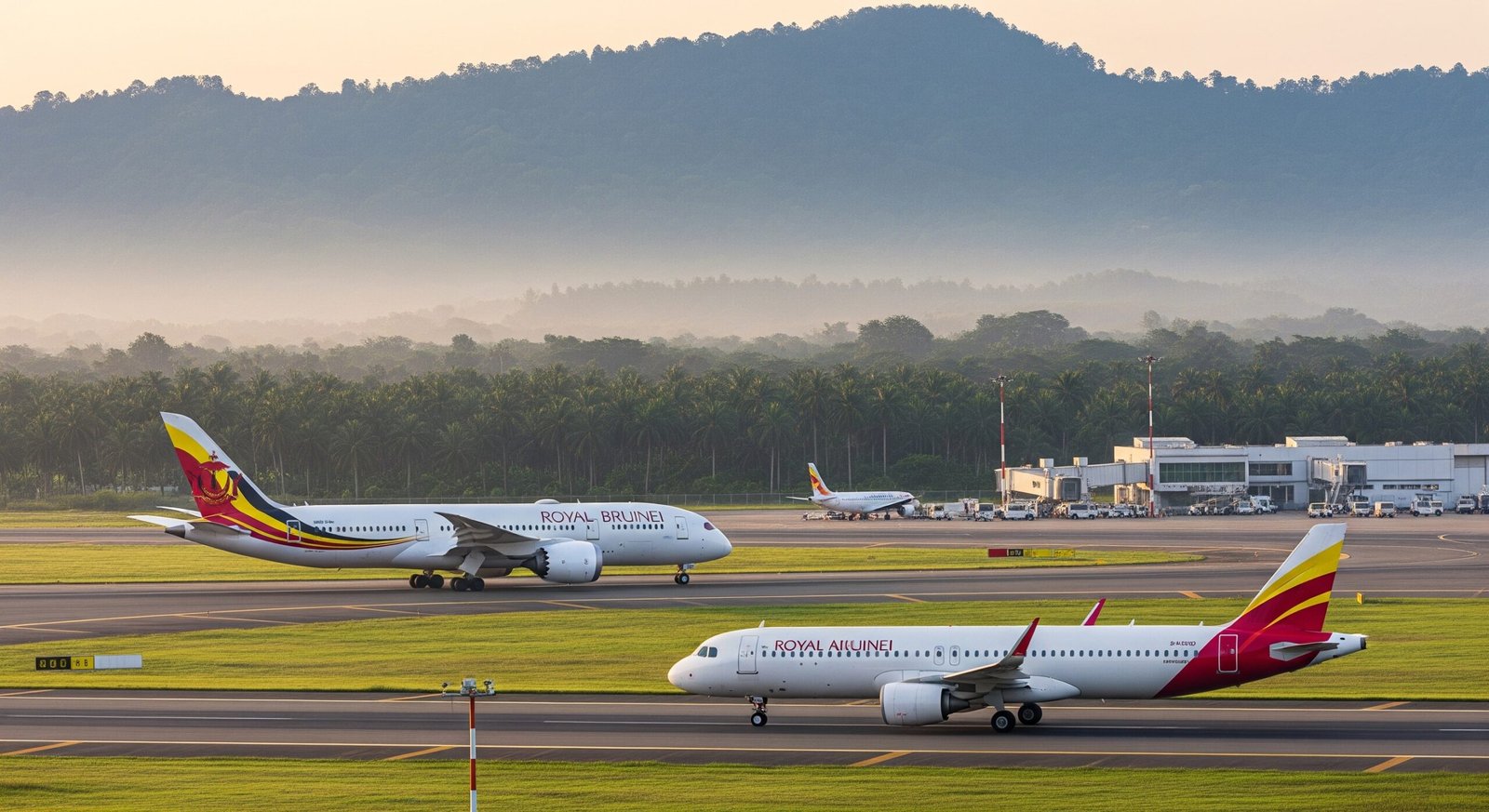
The Royal Brunei Airlines fleet reflects a deliberate strategy – stay lean, stay modern, and maximize efficiency. Rather than accumulating a hodgepodge of aging aircraft, the airline maintains a tight roster of contemporary jets. This approach keeps maintenance costs manageable and passengers comfortable.
Boeing 787-8 Dreamliner Specifications
The Dreamliner serves as Royal Brunei’s long-haul workhorse. These wide-body jets handle the airline’s intercontinental routes with impressive efficiency. The aircraft’s composite construction reduces weight, while its fuel capacity of 33,340 gallons enables non-stop flights across vast distances. According to PlanePhD, the 787-8 consumes approximately 2,227 gallons per hour and requires a takeoff distance of 8,500 feet.
What does this mean for passengers? Larger windows. Better cabin pressure. Reduced jet lag symptoms. The Dreamliner wasn’t just built for airlines – it was engineered with human physiology in mind.
Airbus A320neo Features and Configuration
For regional routes throughout Asia-Pacific, Royal Brunei relies on the Airbus A320neo. The “neo” stands for New Engine Option, and those engines matter enormously. The CFM LEAP-1A and Pratt & Whitney PW1100G-JM powerplants deliver a 20% reduction in fuel burn per seat compared to previous generations.
The A320neo can accommodate up to 194 passengers while offering a range of 3,400 nautical miles. Sharklets – those upturned wingtips you see on modern jets – improve lift-to-drag ratios considerably. The aircraft also supports Sustainable Aviation Fuel blends up to 50%, with plans for 100% compatibility by 2030.
List of Active Aircraft Registration Numbers
Royal Brunei maintains a small but carefully curated fleet. Active registrations include:
-
V8-DLA, V8-DLB, V8-DLC, V8-DLD, V8-DLE – Boeing 787-8 Dreamliners
-
V8-RBS, V8-RBT, V8-RBU – Airbus A320neo aircraft
That’s it. Eight aircraft total. Sounds modest, right? But here’s the thing – a smaller fleet means tighter scheduling, newer average aircraft age, and consistent passenger experience across every flight.
Route Network and Destinations
Royal Brunei Airlines destinations span from London to Melbourne, with strategic stops throughout Asia and the Middle East. The network design reflects Brunei’s geographic position as a natural crossroads between East and West.
Asia-Pacific Hub Routes
Bandar Seri Begawan International Airport serves as the airline’s hub, connecting passengers to major cities across the Asia-Pacific region. Routes cover traditional powerhouses like Singapore, Hong Kong, and Tokyo alongside emerging destinations experiencing rapid tourism growth.
Air capacity across Asia has increased by 5.9% year-over-year, signaling robust recovery in regional travel. Cities like Fukuoka and Sapporo in Japan are seeing increased demand, showcasing a shift away from traditional urban centers. Royal Brunei taps into this trend by offering convenient connections through its Brunei hub.
European and Middle East Connections
The airline’s long-haul network extends to London Heathrow – a critical gateway for European traffic. Middle Eastern connections include Dubai, providing access to connecting flights throughout the Gulf region. These routes showcase the Dreamliner’s capabilities and represent premium revenue generators for the carrier.
What drives me crazy is when people assume small airlines can’t serve distant destinations profitably. Royal Brunei proves otherwise. Strategic route selection and efficient aircraft utilization make transcontinental service viable even for modest-sized carriers.
Codeshare Partnerships and Interline Agreements
No airline exists in isolation. Royal Brunei extends its reach through codeshare partnerships, which allow airlines to sell seats on each other’s flights using their own flight numbers. This simplifies itineraries and enhances booking options for travelers.
Interline agreements provide additional flexibility. While less integrated than codeshares, they enable single tickets covering separate flights across complex routings. Partners include various Asian and Middle Eastern carriers, significantly expanding the network beyond Royal Brunei’s own metal.
Cabin Classes and Service Standards
The Royal Brunei Airlines cabin crew has earned recognition well beyond what the airline’s size might suggest. Service standards reflect Bruneian hospitality traditions – warm, attentive, and genuinely caring.
Business Class Amenities and Seat Configuration
Business class on Dreamliner flights features lie-flat seats arranged in a 2-2-2 configuration. Passengers receive premium bedding, noise-canceling headphones, and amenity kits. Dining follows a multi-course format with choices inspired by both Asian and international cuisines.
The seat design prioritizes direct aisle access and privacy. It’s basically like having a small private compartment – miles removed from the cattle-car experience some budget carriers offer. Dedicated check-in counters and lounge access complete the premium experience.
Economy Class Features and In-flight Entertainment
Economy class passengers enjoy personal entertainment screens with extensive content libraries. Seatback systems offer movies, television shows, music, and games. USB and power outlets keep devices charged throughout flights.
Seat pitch meets industry standards for long-haul comfort. Complimentary meals and beverages are served on all flights, with special dietary requirements accommodated upon advance request. The airline emphasizes a comfortable journey regardless of ticket class.
World-Leading Cabin Crew Recognition
The single most frustrating part of flying is inconsistent service. One flight feels luxurious, the next feels like an afterthought. Royal Brunei’s crew training aims to eliminate that variability entirely.
Industry awards validate this approach. SKYTRAX recognizes cabin crew excellence based on both technical service skills and soft characteristics like enthusiasm and friendliness. Singapore Airlines claimed top honors in 2025, but competition remains fierce across Asian carriers. Royal Brunei consistently performs well in regional rankings, earning respect despite its smaller scale.
Conclusion
Royal Brunei Airlines proves that airline quality isn’t determined by fleet size or route quantity. Modern aircraft, strategic partnerships, and exceptional cabin crew create an experience rivaling much larger competitors. For travelers seeking alternatives to crowded mega-carriers, this Southeast Asian gem deserves serious consideration.
Frequently Asked Questions
Does Royal Brunei Airlines serve alcohol on flights?
No. As the flag carrier of an Islamic nation, Royal Brunei operates as a dry airline. Alcoholic beverages are not served on any flight, though non-alcoholic alternatives are plentiful.
What baggage allowances do passengers receive?
Economy passengers typically receive 30kg checked baggage on long-haul flights and 7kg carry-on allowance. Business class allowances increase to 40kg checked. Specific allowances vary by route and fare class.
When can passengers check in online for flights?
Online check-in opens 48 hours before departure and closes 3 hours prior. Passengers can select seats and print boarding passes through the airline’s website or mobile app.
What frequent flyer program does the airline offer?
Royal Skies is the airline’s loyalty program. Members earn miles on Royal Brunei flights and partner airlines, redeemable for award tickets, upgrades, and other benefits.
How many destinations does Royal Brunei currently serve?
The airline serves approximately 20 destinations across Asia, Australia, the Middle East, and Europe. Network size fluctuates seasonally based on demand patterns.